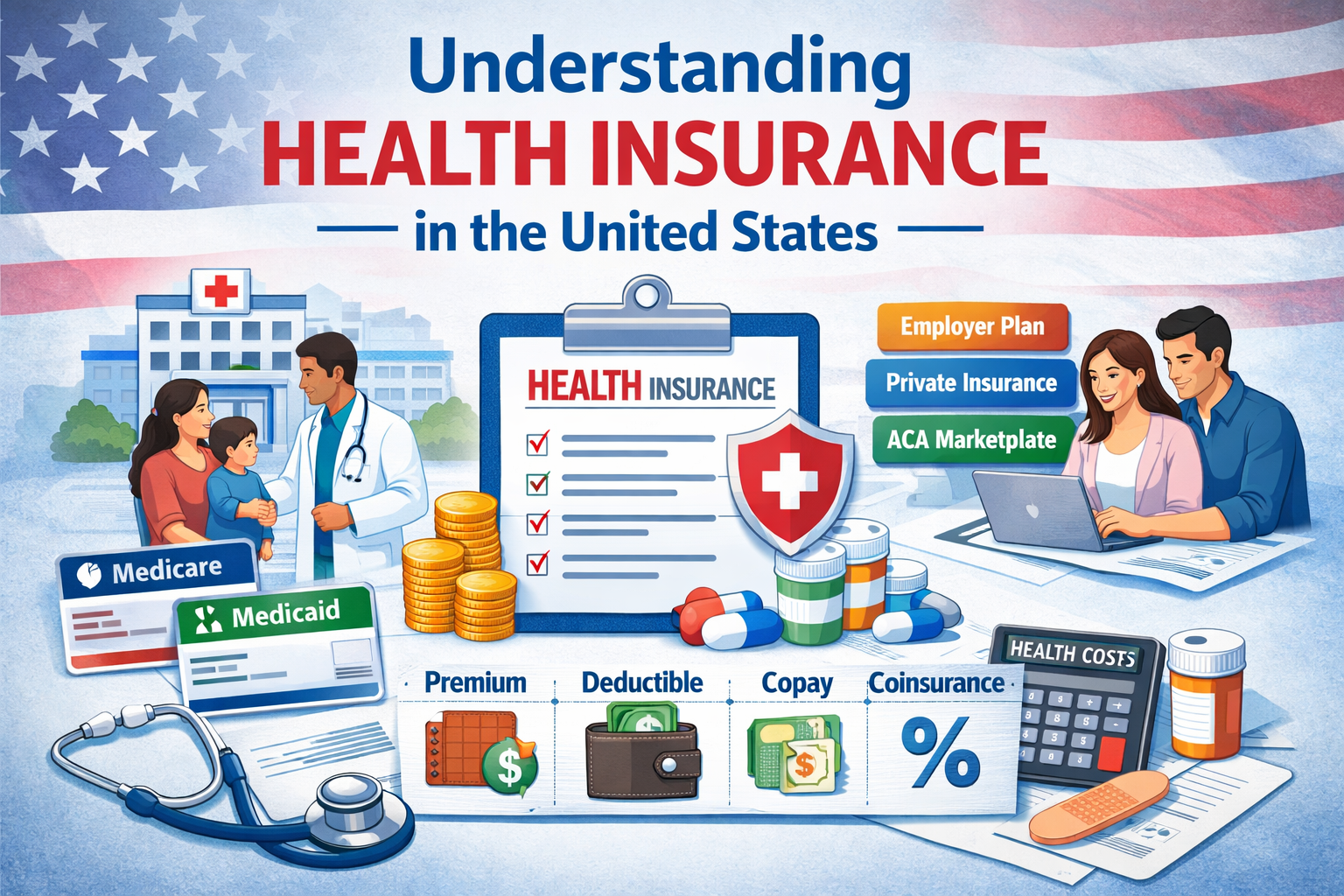
The U.S. health insurance system can feel overwhelming due to its unique mix of private and public programs, complex terminology, and varying levels of coverage. Unlike countries with single-payer systems, the United States relies on a multi-payer system where insurance is obtained through employers, government programs, or individual purchases . This article breaks down the fundamentals to help you navigate your health coverage options with confidence.
What is Health Insurance and Why Do You Need It?
Health insurance is a contract between you and an insurance company. You pay a regular fee, and in return, the plan helps cover your medical costs . It is designed to protect you from the high, often unexpected, costs of healthcare . Without it, a single hospital stay or serious accident could result in medical bills amounting to tens of thousands of dollars that you would have to pay on your own.
With health insurance, you gain access to a network of negotiated rates with doctors and hospitals, which helps lower the overall cost of care. In addition to covering expenses for unexpected illnesses or injuries, insurance typically makes it easier to afford routine doctor visits and preventive care, such as vaccinations and screenings, which are often covered at no cost to you .
How to Get Health Insurance
In the U.S., there are several primary avenues for obtaining health coverage.
Employer-Sponsored Coverage
The most common way for non-elderly Americans to get health insurance is through their job or a family member’s job . Employers often share the cost of the monthly premium with their employees, making this a more affordable option for many .
Individual Market and the ACA Marketplace
If you are self-employed, retired early, or your job doesn’t offer insurance, you can buy a plan on your own. The Affordable Care Act (ACA) created the Health Insurance Marketplace (accessible via HealthCare.gov) where individuals and families can compare plans, enroll in coverage, and find out if they qualify for premium tax credits that lower their monthly costs . These plans are required to cover ten essential health benefits and cannot deny coverage or charge more due to pre-existing conditions .
Government-Sponsored Public Programs
The government provides health insurance for specific populations, including seniors, people with disabilities, and those with low incomes.
Understanding the Two Main Types of Insurance
Health insurance in the U.S. generally falls into two categories: private and public.
Private Insurance
Private plans are offered by companies and can be obtained through an employer or purchased individually. Most private plans are a form of managed care, meaning they contract with specific doctors and hospitals (a “network”) to provide care at lower costs . The main types of managed care plans include:
- Health Maintenance Organizations (HMOs): These plans usually limit coverage to care from doctors who work for or contract with the HMO. They often require you to choose a primary care physician (PCP) who coordinates your care and provides referrals to see specialists. Premiums tend to be lower, but you generally have no coverage for out-of-network care except in emergencies .
- Preferred Provider Organizations (PPOs): PPOs offer more flexibility. You can see doctors inside or outside the network, though you will pay less if you stay in-network. You do not need a referral to see a specialist. This flexibility typically comes with higher premiums than an HMO .
- Exclusive Provider Organizations (EPOs): An EPO is a mix of HMO and PPO features. Like an HMO, services are covered only if you use the plan’s network (except in an emergency). However, like a PPO, you usually don’t need a referral to see a specialist .
- Point of Service (POS): In a POS plan, you pay less if you use in-network providers. Like an HMO, you need a referral from your primary care doctor to see a specialist .
Public (Government) Insurance
Public programs provide coverage for eligible individuals:
- Medicare: A federal program primarily for people age 65 or older, as well as for some younger individuals with certain disabilities or health conditions like End-Stage Renal Disease . It has different parts:
- Part A (Hospital Insurance): Covers inpatient hospital stays, care in a skilled nursing facility, and hospice care .
- Part B (Medical Insurance): Covers certain doctors’ services, outpatient care, medical supplies, and preventive services .
- Part C (Medicare Advantage): An alternative to Original Medicare offered by private companies approved by Medicare. These plans bundle Part A, Part B, and usually Part D .
- Part D (Prescription Drug Coverage): Helps cover the cost of prescription medications .
- Medicaid: A joint federal and state program that provides health coverage to eligible low-income adults, children, pregnant women, elderly adults, and people with disabilities .
- Children’s Health Insurance Program (CHIP): Provides low-cost health coverage to children in families that earn too much money to qualify for Medicaid but cannot afford private insurance .
Key Health Insurance Terms Explained
To choose and use a plan effectively, you must understand its costs. These are often shared between you and the insurance company .
Putting It All Together: A Practical Example
Understanding how these costs work together is key. Imagine you have a health plan with the following details :
- Monthly Premium: $300
- Deductible: $5,000
- Coinsurance: 20%
- Out-of-Pocket Maximum: $6,000
Now, suppose you have a serious accident and need surgery, resulting in a covered medical bill of $50,000. Here is how the costs would break down:
- Deductible: You must first pay the first $5,000 of the bill yourself.
- Coinsurance: After meeting the deductible, your 20% coinsurance kicks in. You would pay 20% of the remaining costs, and your insurance would pay 80%. However, because your out-of-pocket maximum is $6,000, you will only pay another $1,000 (to reach the $6,000 total) before your plan covers 100% of the rest.
- Total You Pay: Your total out-of-pocket cost for the $50,000 bill is capped at $6,000 (plus your monthly premiums). Your insurance plan pays the remaining $44,000 .
How to Choose a Plan and Get Help
When selecting a plan, consider both your expected health care needs and your finances. If you anticipate needing many services, a plan with a higher premium but lower deductible might save you money overall. If you are generally healthy and only need preventive care, a lower premium with a higher deductible could be a more cost-effective choice .
Always check if your current doctors are in the plan’s network, as using out-of-network providers can drastically increase your costs . If you are uninsured or need assistance, resources are available. You can visit the Health Insurance Marketplace at www.healthcare.gov to explore your options and see if you qualify for subsidies . Federally funded health centers also provide medical care on a sliding-fee scale based on income .
Health insurance is a complex but essential tool for managing your health and financial well-being. By understanding the basic structure, key terms, and your own needs, you can make informed decisions and use your coverage more effectively.